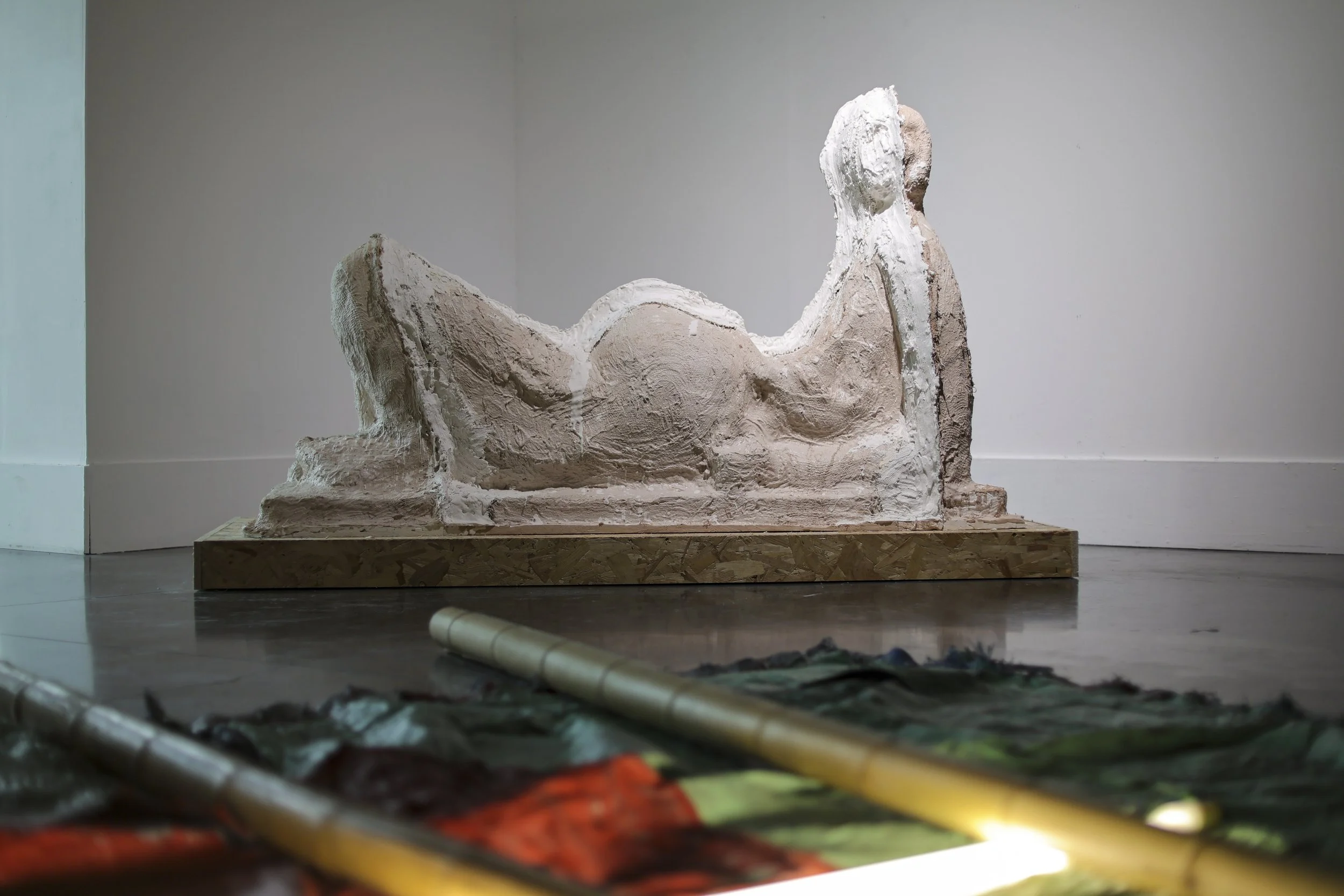
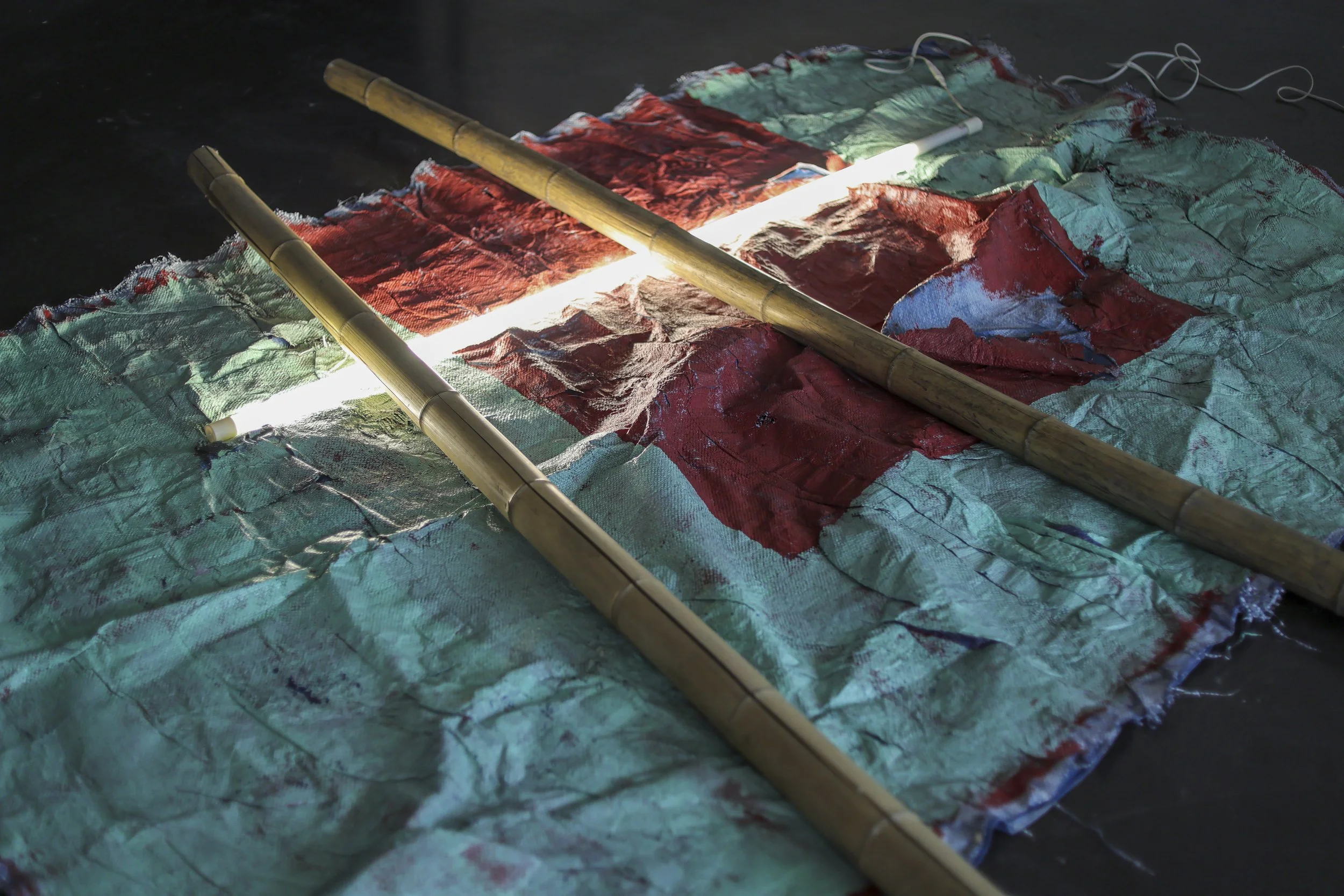
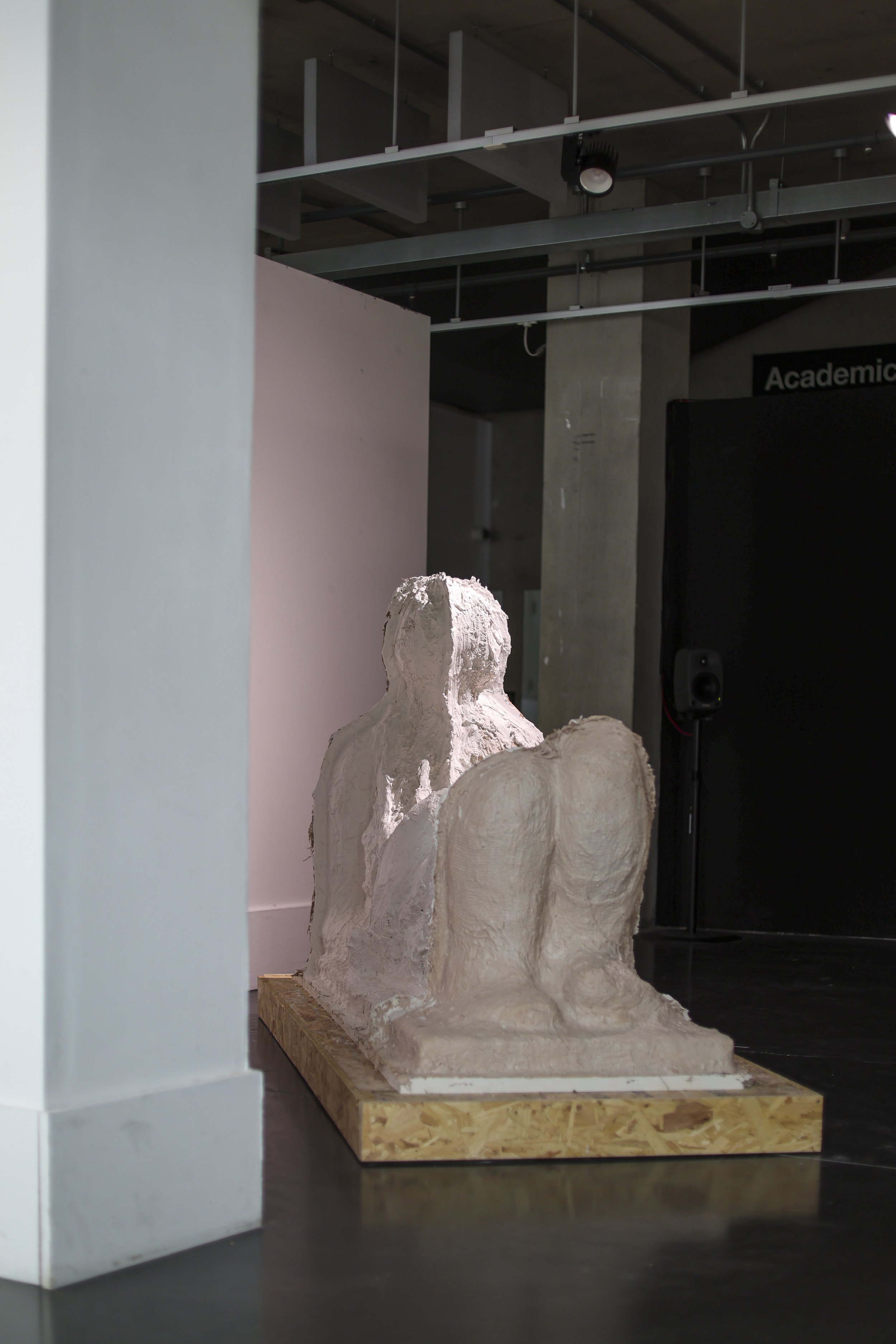
Halo-Halo (installation photo) 2026
Bamboo, tarpaulin, strip lights, plaster, audio
Variable dimensions
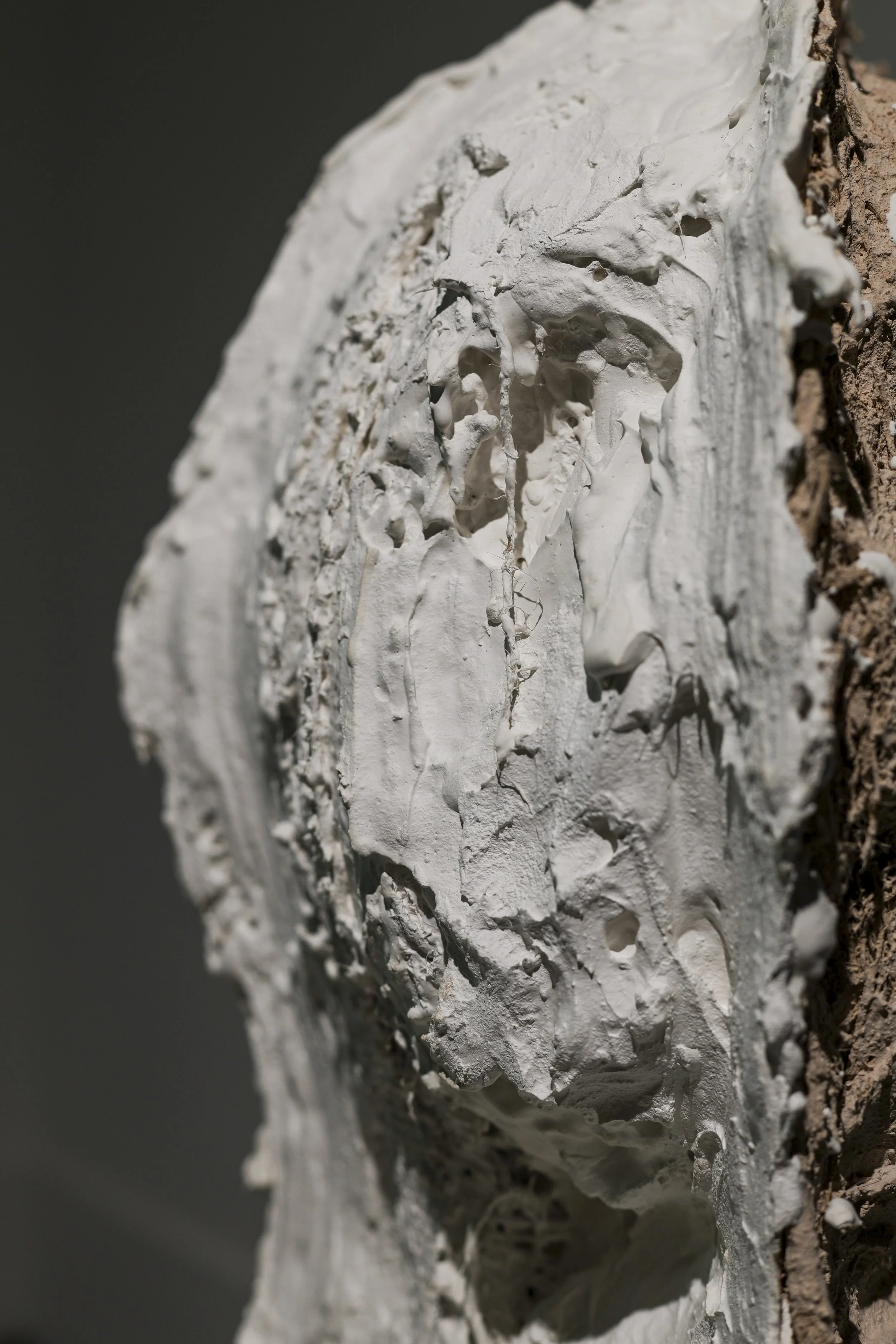
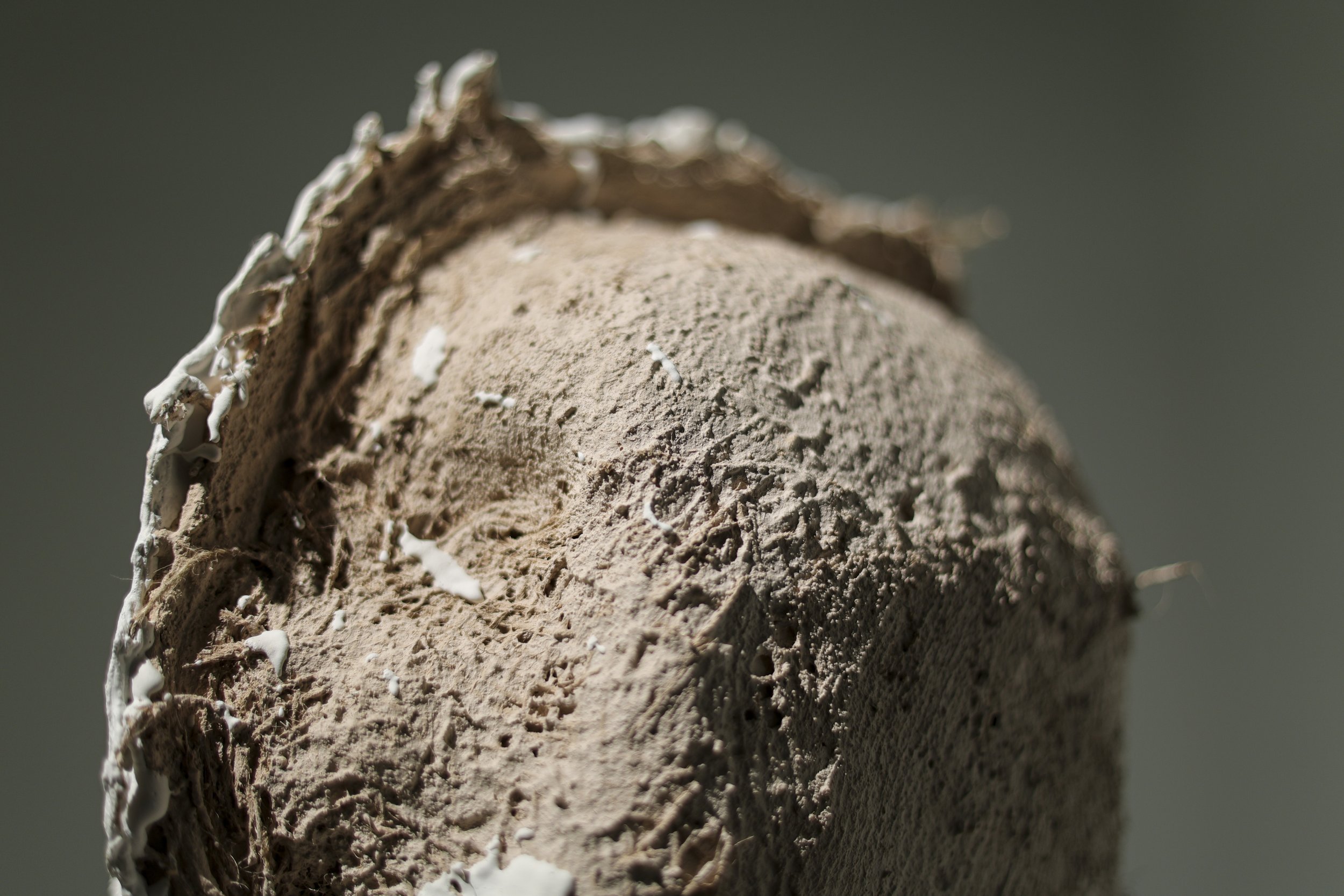
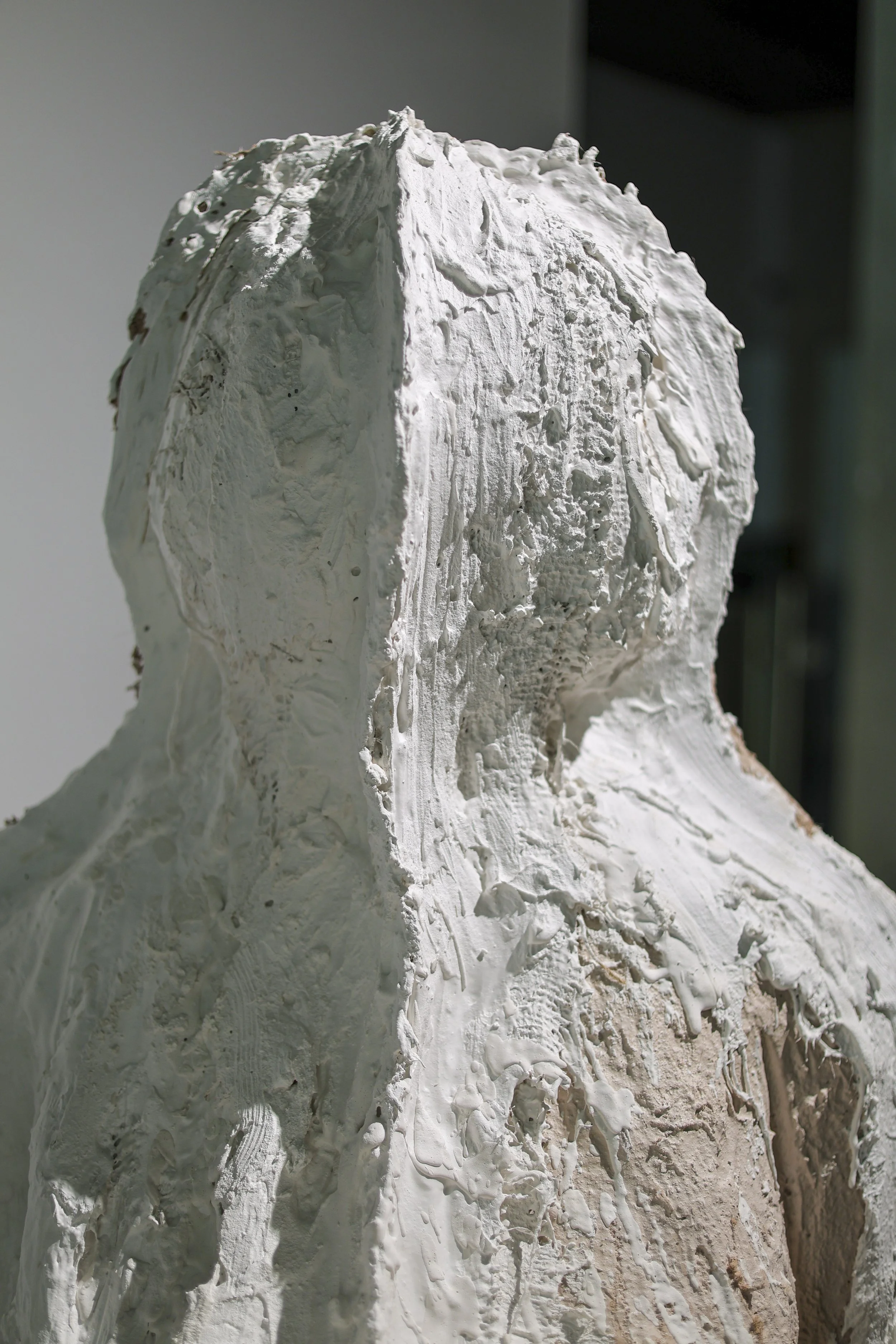
Named after the Filipino dessert meaning “mix–mix”, Halo-Halo expands my ongoing exploration of casting as both a sculptural process and a way of assembling speculative mythologies from the fragments of inherited histories, material culture, memory, and place. Through cast forms incorporating culturally significant materials—including ube, calamansi, coconut husks, candied jellies, and bamboo—the work explores hybridity through processes of material signification, where everyday materials become carriers of labour, landscape, spirituality, and cultural inheritance.
The sculptures remain partially enclosed within their plaster mould jackets, reflecting on the historical slur “half-caste”. By interrupting the casting process, the works reject inherited notions of incompleteness or partial identity, instead proposing hybridity as a continual process of formation, translation, and becoming. Casting extends beyond fabrication to become a methodology for recasting histories assembled through family photographs, oral histories, Indigenous Filipino creation stories, colonial archives, and cast-off domestic objects. Rather than reconstructing a singular past, the works embrace contradiction, slippage, and transformation as generative conditions.
An accompanying sound work extends this process of recasting through listening. Traditional percussive rhythms from the Filipino folk dance- Tinikling- are interwoven with field recordings made in the Philippines—conversations with family, boats crossing water, karaoke drifting through neighbourhoods, and ambient sounds that mark everyday life. Like the sculptures, these recordings collapse distinctions between memory and documentation, weaving together personal experience and collective history into a layered sonic landscape that remains in a continual state of becoming.

At First Light 2025
Reclaimed Victorian floorboards, plywood, acrylic and walis tambo
420 x 60 x 60cm
At First Light is a sculptural work inspired by the Filipino banca boat—modelled after my grandfather’s fishing vessel. The banca, traditionally used for transporting small groups and fishing. Its form is shaped by regional design research, my own experiences, and the memories shared by my mother and extended family, whose stories helped reconstruct my best approximation of my grandfather’s boat.
Mamingwitay (Surigaon dialect for 'fisherman')
The boat is a fiction. I never saw my grandfather in a boat, not see him work as a fisherman. He would be largely stationary when I saw him. Injuries to his knees from working out in the elements has robbed him of free movement. He would sit outside on the porch.
My sister and I would ask our mother if we could go to the beach the next day. She would defer to my grandfather. He would ponder, and feel, and gradually gaze at the moon. Hold his hand up and feel the wind on his worn calloused hands.
He would advise my mother of the best time to go and the type of weather to expect and when we should leave. It was always rainy season and he was always accurate. As a child, without internet and no satellite weather coverage accessible I guess I believed him to be a magical figure.
Mamingwitay ❤️
The boat and the broom are both my fact and fiction. Both symbols of working class labour, adventure and home.


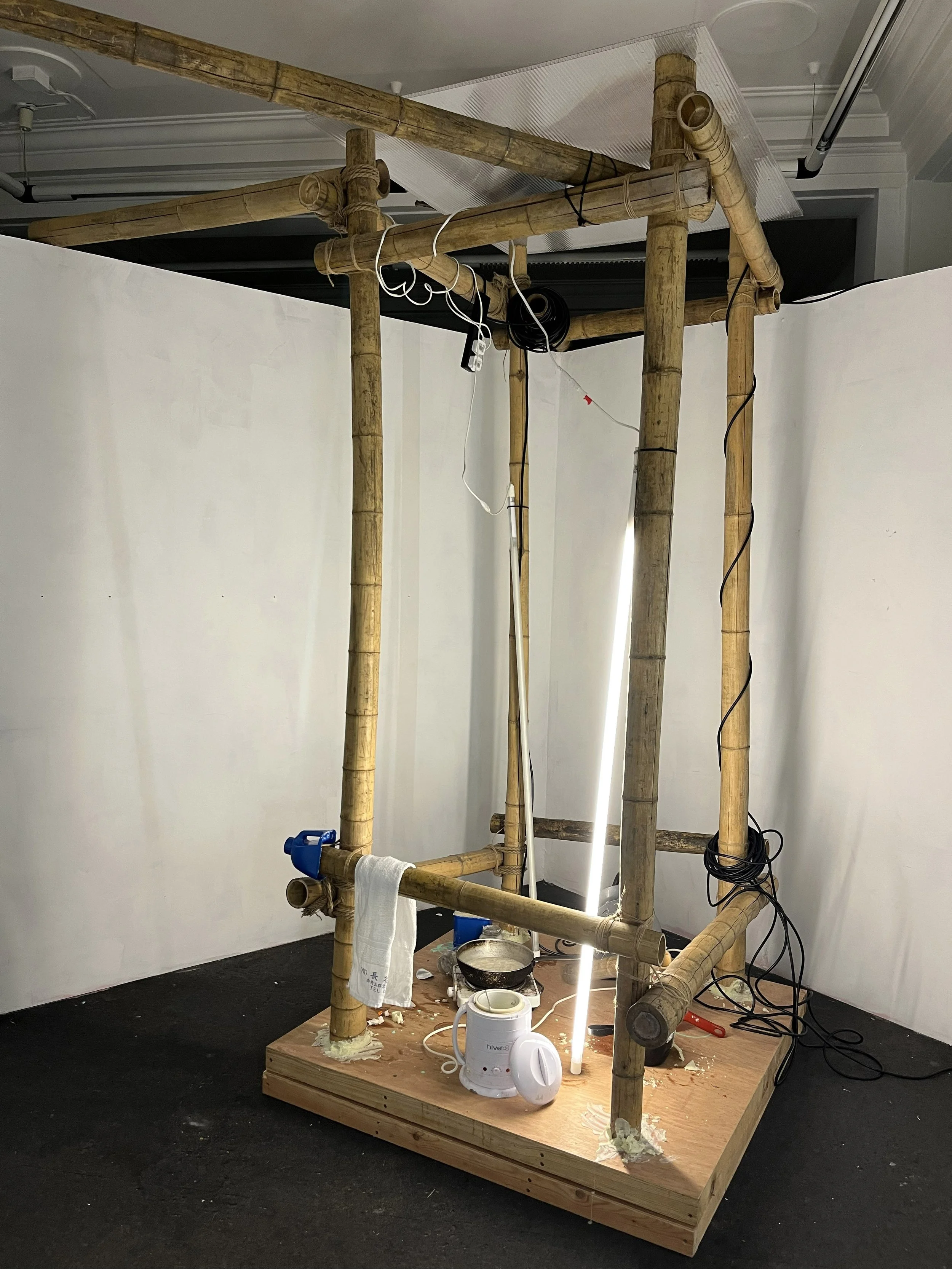
Bodega V1 2025
Bamboo, plywood, strip lights, appliances, acrylic, coconut oil, wax, towel, plastics, tabs
250 x 122 x 122cm
Stay Sweet 2025
Jesmonite, candied jellies, ube
25 x 10 x 10cm
Halo-halo is a beloved Filipino iced dessert whose name translates to "mix-mix" in English—a nod to its eclectic composition. Traditionally, it features a vibrant medley of ingredients such as sweetened condensed milk, coconut-based gelatin confections, and finely shaved ice. Occasionally, unexpected additions like cornflakes are layered in, adding a surprising crunch to this playful, textured treat.


